

Today, we’re sharing a straightforward self-massage technique that you can easily practice at home as part of your bedtime routine.
How to Find the Sacrum Happiness Zone
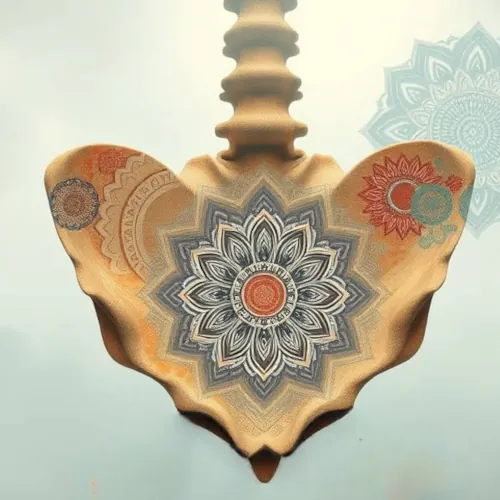
The sacrum is a large bone located in the lower back, forming the back part of the pelvis. It consists of five fused vertebrae and has eight small holes through which nerves pass. These nerves are part of the sacral plexus, which governs leg and pelvic movements and controls the functions of the bladder, rectum, and reproductive organs.
The Happiness Zone is located on the back side of the sacrum, just above the tailbone.

Massage Technique
The method is simple and requires no special tools. Here’s how to do it:
- Use one or both hands. With your index, middle, and ring fingers (excluding the thumb and pinky), perform long, gliding strokes.
- Start at the top of the sacrum and move downward toward the glutes, mimicking the motion of rubbing with a dry cloth.
- Don’t worry too much about exact positioning. Focus on the general area of the sacrum, particularly near the pelvic edges.
- Apply light fingertip pressure—around 5 grams (approximately the weight of a small coin).
- Massage the area gently, moving along the periphery of the sacrum and following the pelvic contour down to the tailbone.
- Repeat this gliding motion 5–7 times before bed.

Results
If done correctly, you’ll experience a subtle sense of happiness radiating from the lower back and glutes. This pleasant sensation indicates that your body has activated the parasympathetic response, promoting relaxation and encouraging restful sleep.
Why Massage the Sacrum with Gentle Fingertip Strokes and for a Short Duration?
The sacrum, as its name implies, is a fascinating and enigmatic area of the human body, capable of eliciting diverse responses depending on the massage technique used.
For instance, prolonged, slow, and sensual rubbing of the sacrum’s “happiness zone” can stimulate nerves connected to the genitals, potentially enhancing sexual arousal. This explains why professional massage therapists typically avoid lingering too long in this region to maintain the appropriateness of the session.

Hint: If you’re a man and a masseuse spends an unusually long time massaging your sacrum with smooth, rhythmic, and pleasurable motions—or similarly focuses on the inner thighs—it might be an attempt to encourage you to inquire about “extras”.
On the other hand, circular movements along the edges of the sacrum and targeted pressure on points near the sacral openings can yield therapeutic effects. Depending on the technique, this may either relax the sphincters or induce their active contraction, which is particularly useful in addressing issues with bowel movements and urination.
Sacrum Happiness Zone and Eastern Medicine
Western medicine offers a straightforward explanation for the existence of the Sacrum Happiness Zone: stimulation of the sacral nerve plexus activates the parasympathetic nervous system, leading to feelings of relaxation and restoration. However, Eastern medical systems provide their own esoteric interpretations.
From the perspective of Indian Ayurveda, the sacral region is associated with one of the seven important energy centers (chakras), called Svadhisthana. This chakra governs emotional balance, pleasure, sensuality, intimacy, sexual energy, and the enjoyment of life’s sensory experiences. The Sacral Chakra can be activated through hip-opening yoga poses such as Pigeon Pose or Bound Angle Pose, breathing techniques, meditation, and sacrum massage.
Traditional Japanese medicine (Kampo) shares conceptual similarities with Ayurvedic theories about the sacral chakra. From the Kampo perspective, the sacrum is an area where emotional stress, anger, and even repressed sexuality can accumulate. A specialized technique within the broader practice of Japanese shiatsu massage, called Sacral Hole Shiatsu, focuses on the small holes in the sacrum. This technique aims to release stored emotions, promoting deep relaxation and overall well-being.
The difference lies in terminology and emphasis: in Ayurveda, the sacral chakra is referred to as the “seat of emotions,” whereas Kampo associates the sacrum more specifically with stored emotional stress. Both systems acknowledge that tension in this area can manifest as emotional imbalances such as insomnia, overthinking, and repression.
Conclusion
Incorporating the Sacrum Happiness Zone massage into your nightly routine is a simple yet effective way to promote relaxation and enhance the quality of your sleep. By gently stimulating this area, you activate your body’s parasympathetic response, encouraging a state of calm and well-being. This practice not only supports restful sleep but can also become a moment of mindfulness and self-care at the end of a busy day. Try it tonight and experience the soothing benefits for yourself!