

That familiar feeling? You’re hunched over your desk or scrolling through your phone feed, and suddenly it hits: your neck goes numb, your shoulders feel weighed down like lead, and a dull, nagging ache settles in the back of your head, lingering for weeks on end.
The culprit might surprise you – it’s how you’re holding your head. Forward Head Posture (FHP), popularly known as “turtle neck” or Tech Neck, isn’t just a cosmetic issue. When it pairs with rounded-in shoulders, experts call it upper crossed syndrome. This is one of those sneaky habits that quietly erodes your health over time.

The good news? Once you grasp the mechanics, you can fix it.
Causes: The Trap of Modern Life
The name says it all: your neck keeps jutting forward, like a turtle peeking out from its shell. The main offender? Our addiction to gadgets.
The mechanics are straightforward: when you stare at your phone or screen, your head shifts off its central axis. A normal adult head weighs about 5 kg. But tilt it just 15 degrees, and the strain on your neck muscles jumps to 12 kg; at 60 degrees, it skyrockets to a staggering 27 kg!
Without movement and with poor posture, imbalance sets in:
- Front line pulls down: Chest muscles and the front of your neck shorten and turn rock-hard.
- Back line gives way: Deep neck and upper back muscles get overstretched, weaken, and fail to hold your head properly. In this tug-of-war, the front muscles win, pulling your head forward and locking it there.
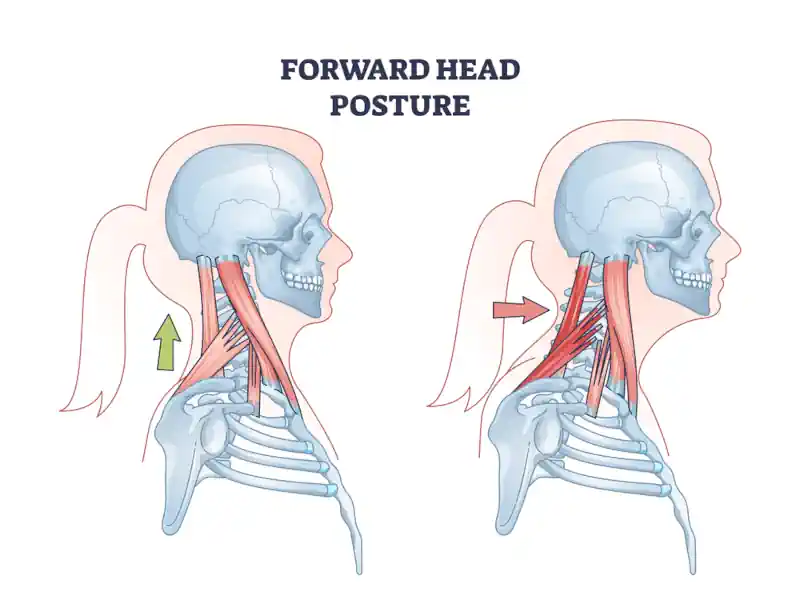
Consequences: More Than Just Slouching
When “turtle neck” and slouching (cervical kyphosis) persist for years, your body builds protective mechanisms. The seventh cervical vertebra starts protruding more prominently. To shield it, your body piles on connective tissue and fat there—forming the “dowager’s hump” or “buffalo hump.” Surrounding fascia stays in chronic inflammation, leading to adhesions and hardening.
What does this lead to?
- Sleep issues: The altered neck curve prevents your head from resting flat, so you can’t sleep on your back or low pillows. Hands often go numb at night.
- Chronic pain and stiffness: Constant tension triggers migraines and limits mobility.
- Nerve compression: In advanced cases, tissue buildup pinches nerves, causing tingling in your fingers.
- Breathing problems: A compressed chest cage stops your lungs from fully expanding.
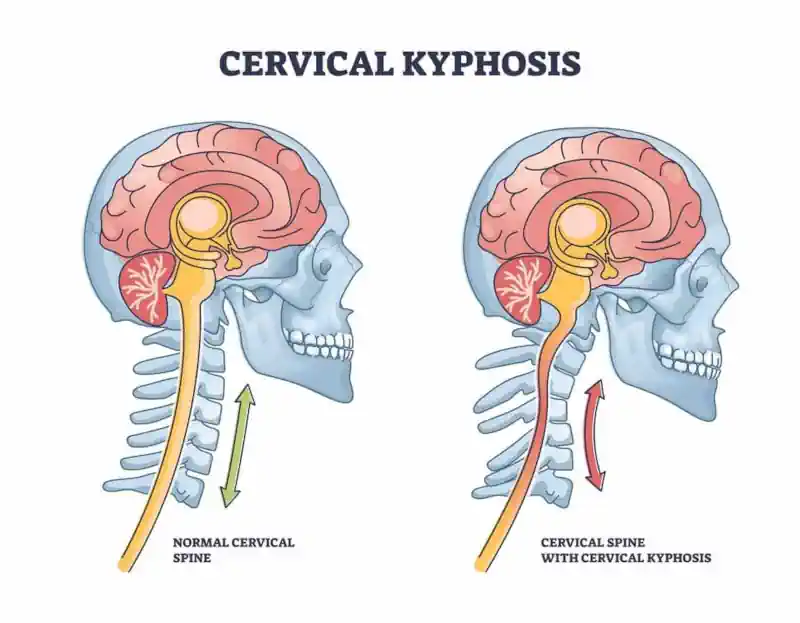
“Turtle neck” is a cumulative symptom. It doesn’t appear overnight, but with each day of inaction, it “sets” more rigidly, turning a bad habit into a skeletal deformity. Don’t wait for irreversible changes. Tackle this early through effective treatment and rehab.
The Forward Head Posture and “upper crossed syndrome” should be reversed as early as possible through effective treatment and rehabilitation training. Don’t wait until the dowager’s hump grows very large and causes irreversible deformation and compression, at which point it will be too late to save it.
The Main Goal for FHP: Restore Muscle Balance
With FHP, some muscles shorten and overactivate (they clench), while others stretch out and weaken. The key is releasing those clenches so your head returns to neutral without effort.
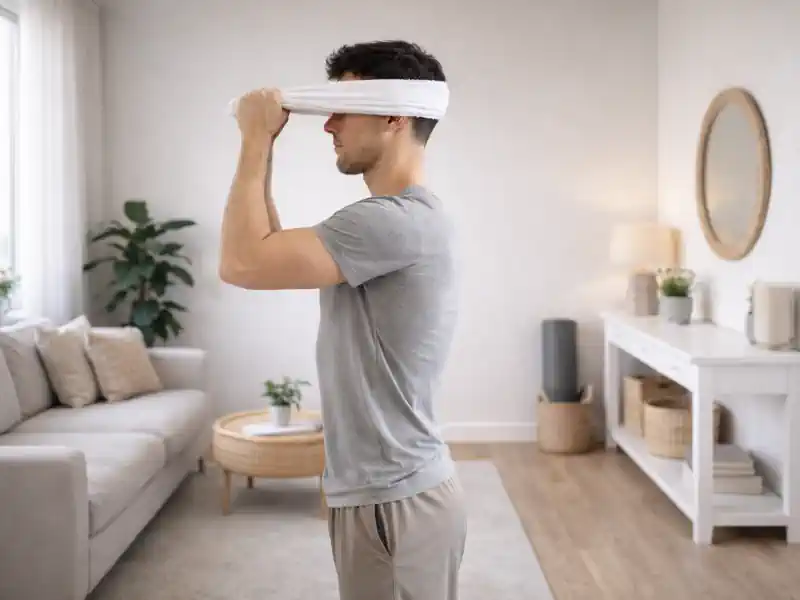
Self-Help: Unblocking and Stretching
DIY self-care can ease acute spasms, but remember: with “turtle neck,” deep muscle layers are often literally “glued” together by fascia.
Self-Massage: Releasing the “Knots”
- Release the Sternocleidomastoid (SCM)
How: Turn your head to one side to make the muscle (that thick cord from ear to collarbone) stand out. Pinch it gently between thumb and index finger (like tweezers) and roll it softly from bottom to top along its length.
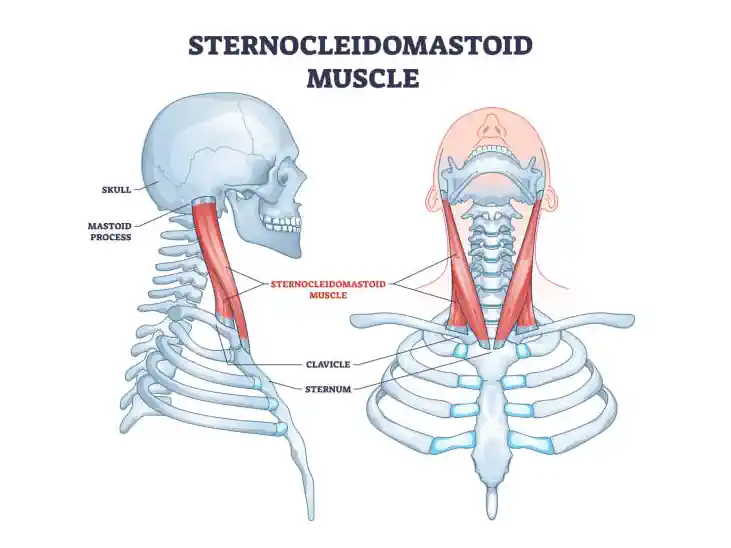
Why: This is the prime “puller” dragging your skull forward. Relaxing it brings instant relief.
- Targeted Work on Suboccipital Muscles
How: Grab two tennis balls (or pop them in a sock). Lie on the floor with them right under the base of your skull (those “dimples” at the back). Just lie there 2–3 minutes, breathing deeply.
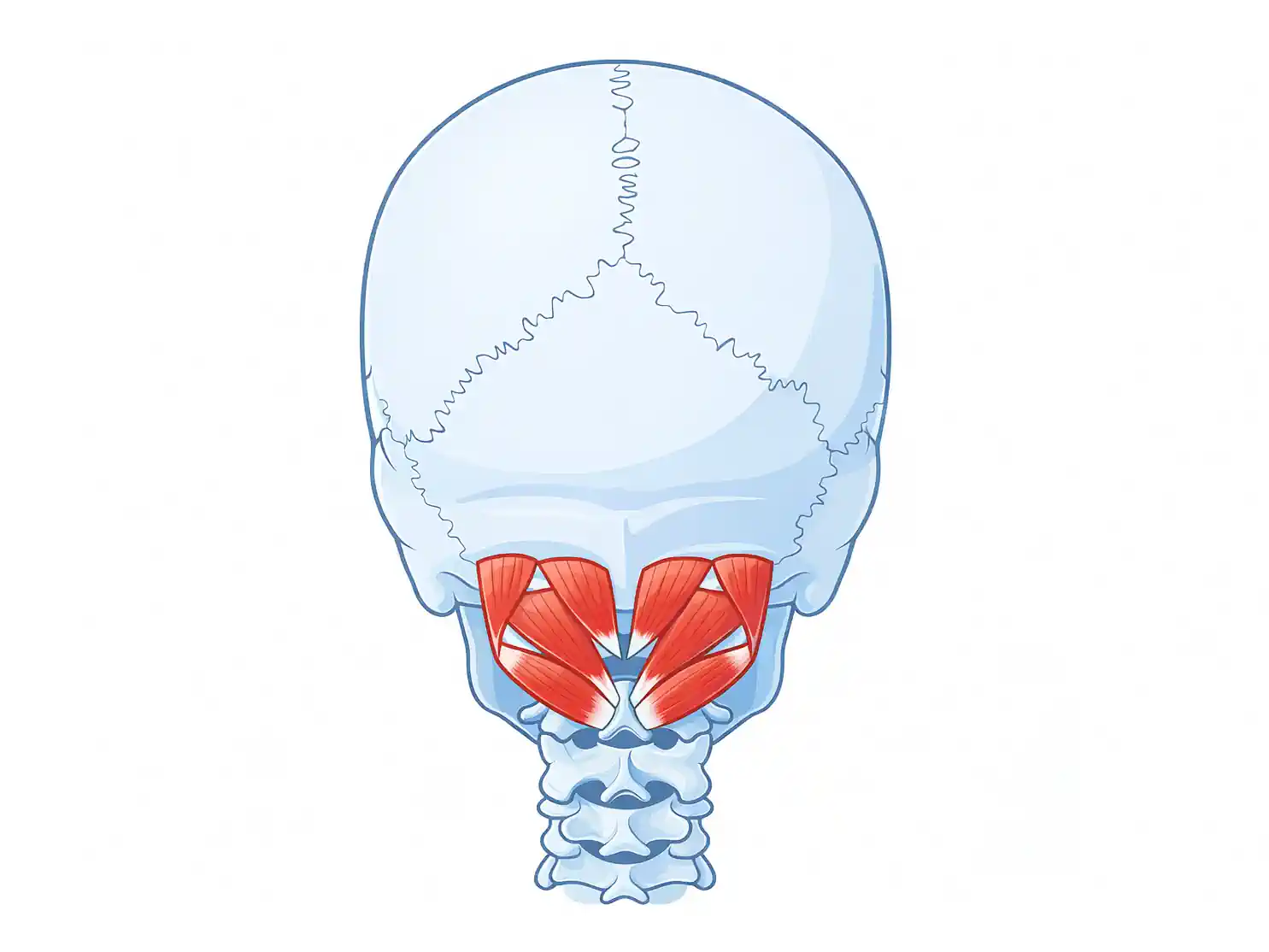
Why: It decompresses the first cervical vertebra and eases eye strain.
- Ball for Pectoral Muscles (Pec Minor):
How: Press a massage ball against the wall with your shoulder (just below the collarbone). Find the tender spot and make small circles or hold pressure while slowly moving your arm out to the side.

Stretching: Returning to Neutral
Static exercises help “lengthen” what’s been shortening for years:
- “Chin Tucks” with Lengthening Focus:
Key: Don’t just make a double chin—imagine being pulled upward by the crown of your head as you draw your jaw back. This stretches the back neck line.
- “Doorway Stretch”:
Nuance: Place your forearms on the doorframe at 90 degrees and step forward. Keep your lower back neutral – focus on opening the chest. This unfurls rounded shoulders.
- Roller Under Shoulder Blades (Thoracic Extension):
How: Lie on your back with a firm roller (or rolled towel) under your shoulder blades. Hands behind head. Gently arch back.
Why: Without thoracic mobility, your neck won’t realign.
Why Isn’t This Enough? Self-massage is a great support tool, but it mainly hits surface tissues. “Turtle neck” problems hide in deep fascial adhesions and trigger points that you can’t reach solo with the right angle and pressure.
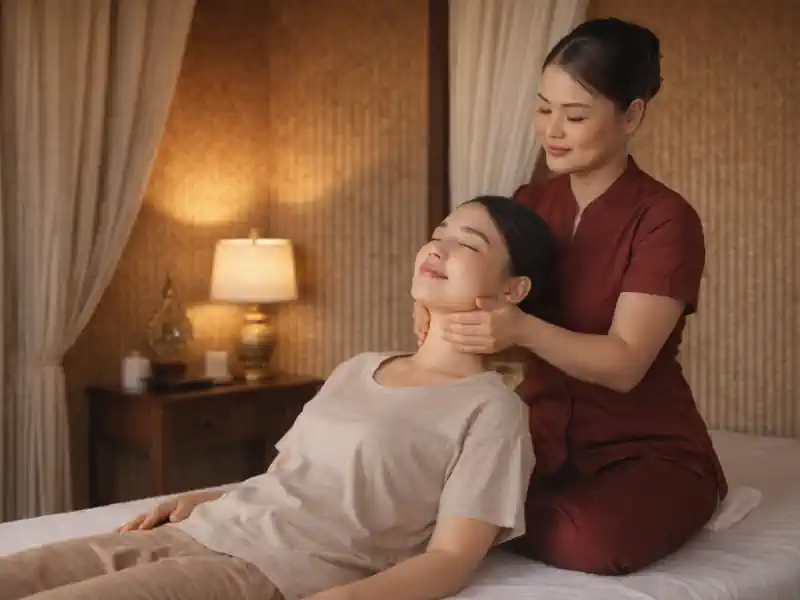
Why Professional Massage Matters
Pro massage isolates every tiny muscle, restores tissue glide, and essentially “reprograms” your body’s muscle memory. It works on three fronts:
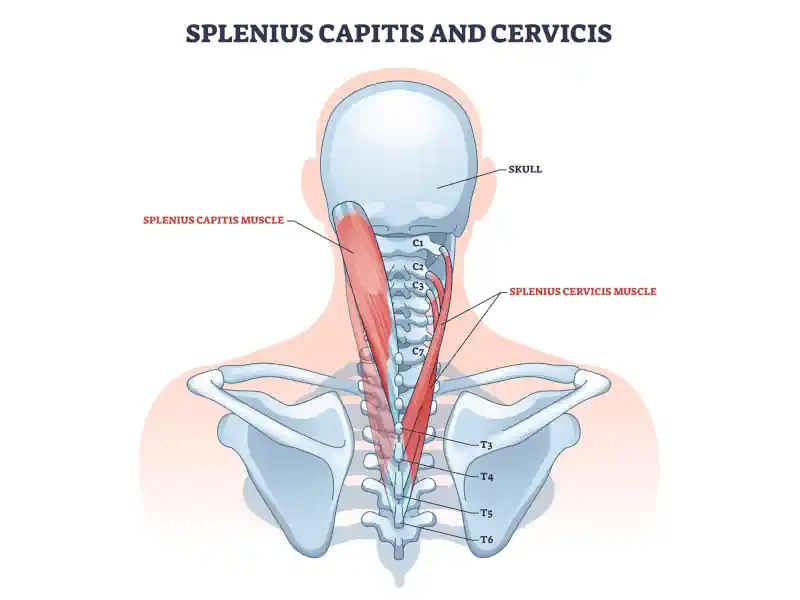
The “Deep Neck Trio”
- Suboccipitals: At the skull base. In FHP, they’re constantly compressed to keep your gaze level. Gentle pressure and stretch here decompresses and eases tension headaches.
- Splenius Capitis: In the neck’s side groove. Working them opens glued-up spaces from poor posture.
- Scalenes: On the neck’s side. Their shortening yanks the neck forward. Massaging along cervical bumps relaxes the front line.
Sternocleidomastoid (SCM)
The star player pushing your head forward, attaching behind the ear to the collarbone.
Why: A tight SCM acts like a lever.
How: Self-pinch or therapist’s circular strokes along its length lengthen it and pull the head back.
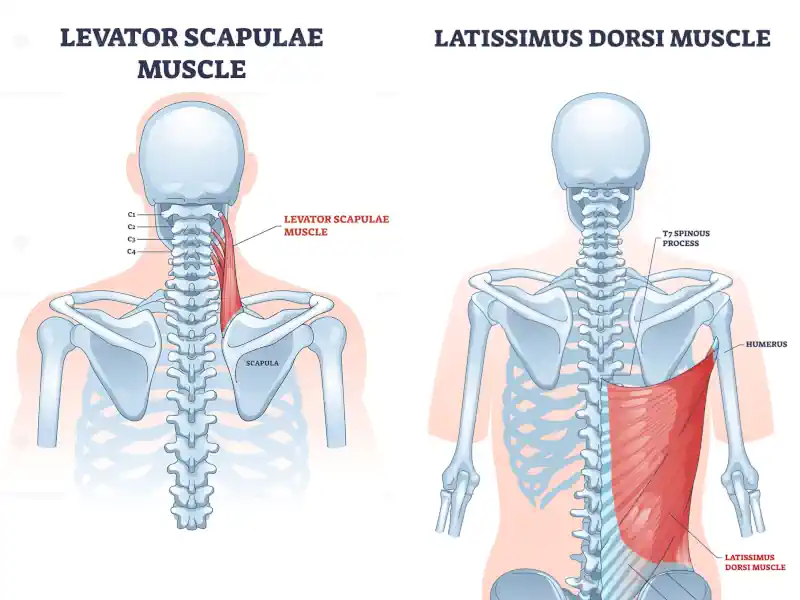
LPL Complex (Levator, Pecs, Lats)
FHP almost always comes with upper crossed syndrome (rolled-in shoulders).
- Levator Scapulae: Often overworked, hiking shoulders to ears. Work from scapula attachment up to vertebrae.
- Pectorals: Massaging and stretching them is crucial—they “close” the chest, forcing neck compensation.
- Lats: They rotate shoulders inward. Side-body massage rotates the shoulder girdle outward and unloads the neck.
Conclusion
Massage for Forward Head Posture isn’t just neck relaxation—it’s deep “unblocking” of the front line (SCM, pecs) and relieving critical tension from the back line (suboccipitals, scapulae). It breaks tissue adhesions holding you in bad posture and reminds your brain of proper muscle alignment. This builds the foundation for true postural correction.