
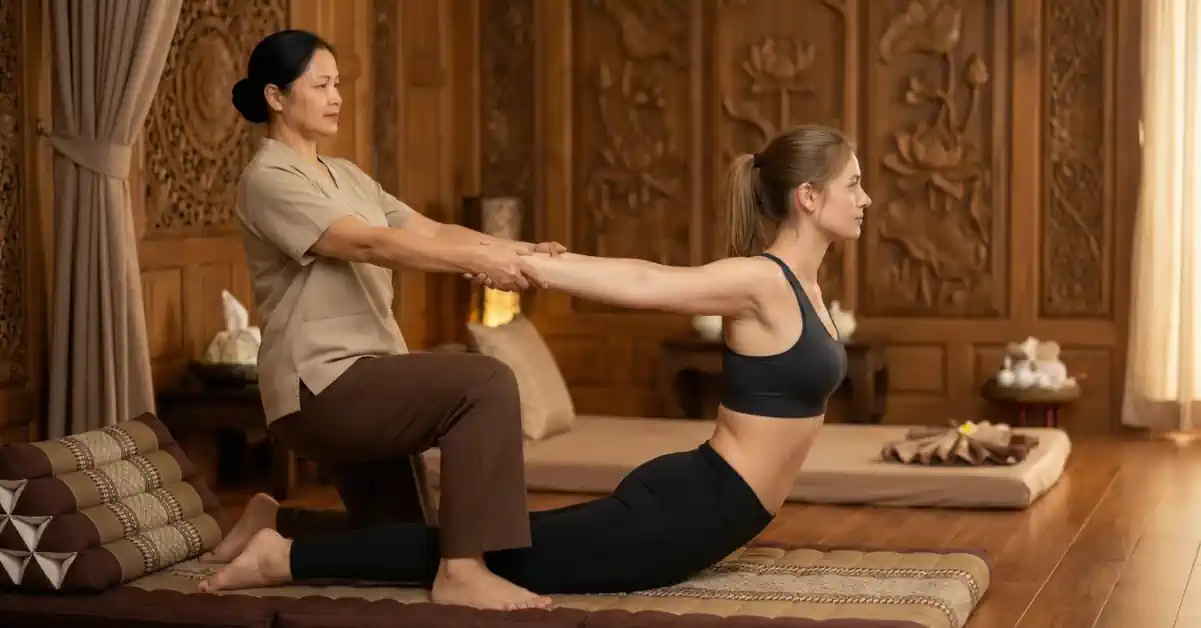
Traditional Thai massage (Nuad Boran or Nuad Thai) stands apart from other massage styles with its unique combination of classic massage techniques (compression and acupressure) alongside passive stretching and joint mobilization in yoga-like positions. This distinctive blend makes Thai massage notably different from most other massage modalities.
Western or Swedish massage focuses on improving circulation through strokes, kneading, and vibrations rather than working with joints and flexibility. In Western medicine, stretching has traditionally been the domain of physical therapy and rehabilitation, not massage therapy. Japanese Shiatsu incorporates some stretching, but in a much more limited way.
The Yoga Connection
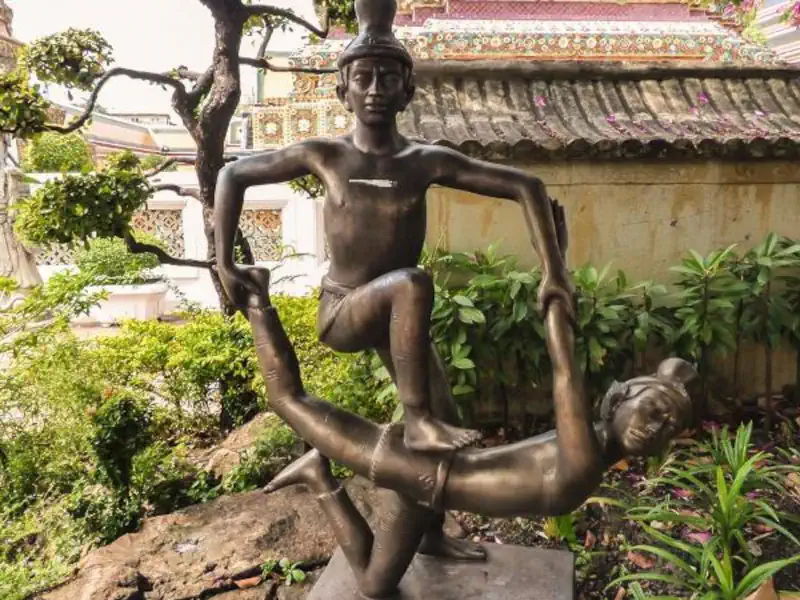
Thai massage’s signature characteristic stems from its roots in the ancient Thai self-healing system called Ruesi Dat Ton (รีษีดัดตน), a yoga-like practice developed by Buddhist hermit-monks (Rishi). Ruesi Dat Ton includes breathing exercises, dynamic movements, static poses, self-massage, self-stretching, and energy work.
Nuad Boran evolved when these hermits began applying the same techniques to others. This is why Thai massage is often called “lazy yoga” or “yoga for lazy people” – clients receive deep yoga-like stretches without any effort. The therapist actively manipulates the client’s body into various positions and asanas.
How Many Stretching Techniques Are There?
During a standard 1.5–2 hour session in the Southern School style (Wat Pho school), practitioners may use up to 60 basic stretching, twisting, and passive yoga techniques. When you factor in all possible variations, difficulty levels, and therapeutic modifications, the repertoire expands to around 300 elements. Some complex acrobatic stretches (like “Thai Flying”) require exceptional skill from the practitioner and significant flexibility from the client.
A skilled Thai massage therapist always works intuitively, choosing techniques based on each client’s individual condition. The intensity and depth of stretches vary significantly between schools – the Northern (Chiang Mai) style tends to be more intense, while the Southern style is generally gentler.
5 Signature Thai Massage Stretches
These assisted stretches will almost certainly be part of your experience when you visit us at Kunlarat Massage:
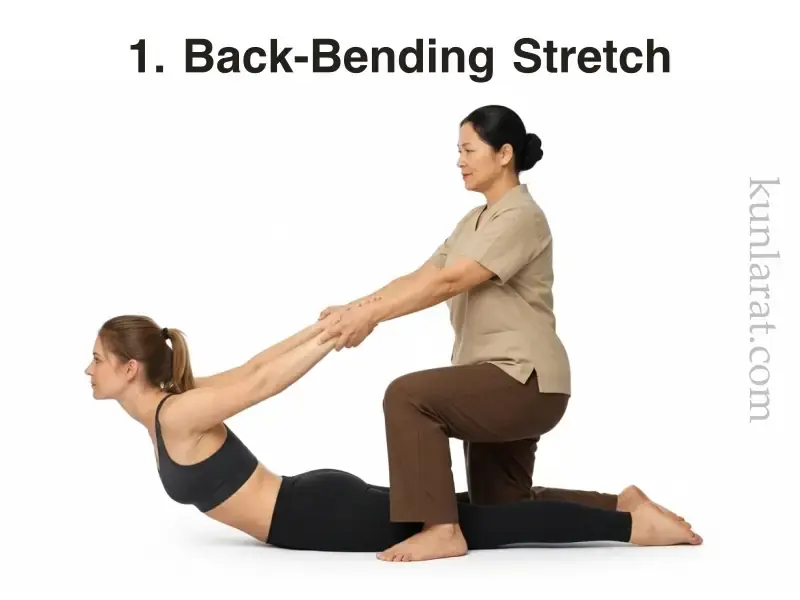
1. Back-Bending Stretch (Cobra Pose)
The Technique: The client lies face down with hands behind the head or alongside the body. The therapist grasps the client’s wrists or elbows and, using knees or feet braced against the client’s thighs or glutes, pulls the torso up and back.
Target Muscles:
- Pectoralis major and minor (chest muscles)
- Anterior deltoid (front shoulders)
- Abdominal muscles
Benefits:
- Deeply opens the chest and corrects slouching posture
- Improves breathing by expanding the ribcage and relaxing the diaphragm
- Provides an emotional “heart-opening” effect and boosts mood
Origin: Yoga pose Bhujangasana (Cobra Pose)
2. Supine Spinal Twist (Crocodile)
The Technique: The client lies on their back while the therapist bends one leg and crosses it over the other, simultaneously holding the opposite shoulder firmly to the floor.
Target Muscles:
- Abdominal obliques (side abs)
- Gluteus maximus (main buttock muscle)
- Pectoralis major and minor (chest)
Benefits:
- Improves overall back mobility
- Releases tension in the lower back and sacrum
- Helps internal organs with digestion
- Deep spinal rotation, often accompanied by a satisfying (and safe) cracking sound
Origin: Yoga pose Supta Matsyendrasana
3. Legs Over Head Stretch (Plow Pose)
The Technique: The client lies on their back as the therapist lifts one straight leg upward and gently presses it toward the client’s head, creating a stretch along the entire posterior chain.
Target Muscles:
- Hamstrings (back of thighs)
- Gluteus maximus (main buttock muscle)
- Piriformis (deep hip muscle in the glute area)
Benefits:
- Provides deep stretch for the entire back of the body and legs
- Relieves lower back tension and improves hip mobility
- Helps with sciatica (nerve pain) by stretching deep hip muscles
- Essential for lower back health
Origin: Yoga pose Halasana
4. Butterfly Stretch (Reclining Bound Angle)
The Technique: The client sits or lies on their back with feet together and knees apart. The therapist uses forearms or hands to press the client’s legs toward the floor, or assists the client in bending forward toward their feet.
Target Muscles:
- Longus, magnus, brevis, and gracilis (inner thigh muscles)
- Pectineus (upper inner thigh)
- Groin muscles
Benefits:
- Deeply opens the hips and stretches inner thighs
- Relieves tension in the pelvic area and helps with lower back or sacrum pain
- Improves mobility and flexibility in the hip joints
Origin: Yoga pose Baddha Konasana
5. Seated Side Stretch (Pyramid/Gate Pose)
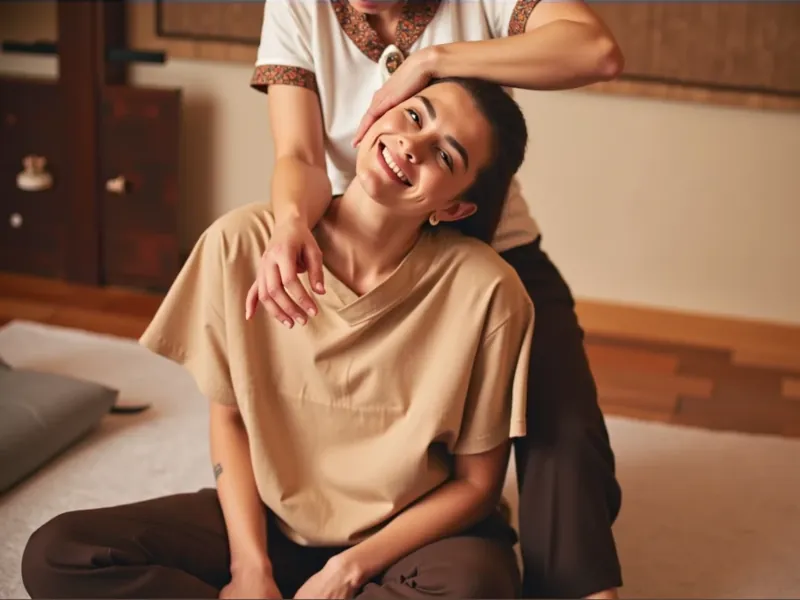
The Technique: The client sits while the therapist guides them into a lateral bend, opening the entire side of the body.
Target Muscles:
- Quadratus lumborum (lower back)
- Latissimus dorsi (widest back muscle)
- External and internal obliques (side abdominals)
Benefits:
- Opens the side body and releases lower back tension
- Improves breathing by expanding the diaphragm area
- Relieves side and lower back pain caused by sedentary lifestyle
Origin: Yoga pose Parsva Sukhasana
Why Stretching Matters
The use of passive/assisted stretches—where the therapist positions the client’s body—provides several important benefits:
Significantly Increased Flexibility and Range of Motion
Muscles, tendons, and fascia lengthen while joints gain greater range without any effort from the client. This is the most noticeable and fastest result—after just 1–2 sessions, you’ll feel a new sense of freedom in your body.
Enhanced Joint Mobility
Stretching combined with compression improves synovial fluid circulation, lubricating the joints. This is especially important for the spine, hips, and shoulders.
Deep Muscle Relaxation and Release of Chronic Tension
After warming muscles through massage, they stretch more easily, reducing tone and dissolving knots. Thai massage often addresses issues that regular massage can’t quite reach.
Faster Recovery After Physical Activity
Improved elimination of lactic acid and metabolic waste, faster delivery of oxygen and nutrients. Highly valued by athletes and active individuals.
Improved Blood and Lymph Circulation
Stretching combined with rhythmic movements acts like a pump for blood and lymph. Helps with swelling, heavy legs, cellulite, and general toxin buildup.
Pain Reduction (Especially Back, Neck, and Lower Back)
Reduces nerve compression and relieves muscle spasm. Research shows good results for chronic lower back pain.
Posture Correction and Muscle Balance
Stretches shortened muscles (chest, hip flexors, lower back) and improves body control. Often noticeable after just 4–6 sessions.
Deep Central Nervous System Relaxation and Stress Relief
Passive yoga-like poses combined with breathing activate the parasympathetic nervous system. The “reset” effect is stronger than with regular massage.
Injury Prevention and Improved Coordination
The body “remembers” its normal range of motion. Especially relevant for sedentary lifestyles and age-related changes.
Important: The body works as an integrated system. Stretching one area affects muscle and fascial chains throughout the entire body. For example, stretching the back of the legs influences the lower back and neck.
Important Considerations
If you have hypermobile joints—meaning you’re extremely flexible and your joints can move beyond the typical range of motion—you may need to avoid some static stretches. Although you might still feel stiff and creaky, other forms of therapy like soft tissue massage, movement exercises, and muscle strengthening might be better suited for your needs. Always consult with a qualified healthcare professional if you have concerns.