

Traditional Thai massage usually involves stretches, bends, and other manipulation of the spine. Serious complications associated with it are extremely rare. Nevertheless, if an unskilled masseuse forces your body into an improper position or through an abnormal range of motion, there’s a certain risk of painful, but thankfully not fatal microtrauma and damage to a flexible connective tissue in the spine.
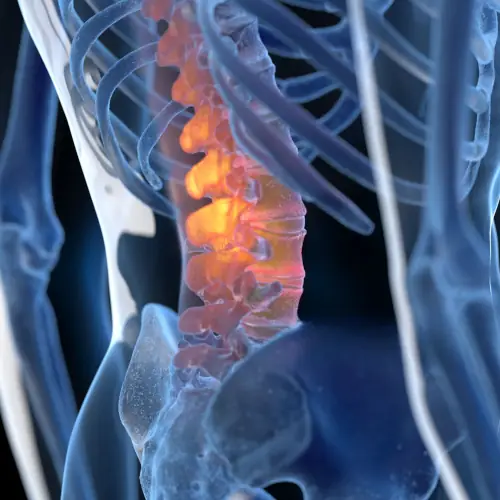
Injuries of spinal cartilage caused by bad massage are usually minor and able to heal on their own in days to weeks. In some cases, however, people might be barely able to move for a while due to sharp pain starting in the lower back or neck and spreading to the buttocks and thighs, shoulders, and arms. In the worst-case scenario, those who have already developed severe back disease may face more serious consequences and require surgery to repair the damage.
Let’s find out how this condition comes about and what kind of Thai massage could help cure it. A bit of anatomy to begin with.
What is a disc in the spine?
Your spine consists of 24 bones, called vertebrae, between which are round, spongy pads called discs. These discs link vertebrae together, allow the spine to bend and twist, and protect it from damage when we walk, run, and jump.
Each disc is a mini-hydraulic shock absorber, with a tough, fibrous outer ring and a soft, jelly-like core. At young age, the core is made up of 70 to 90% water and then this amount gradually decreases as one gets older. However, it can vary even throughout the day – when we don’t drink enough water, the disc dehydrates, causing its inner part to shrink and lose some of its shock-absorbing capability.

Disc degeneration
As we age, the outer rings deteriorate and stiffen. When the disc becomes too compressed, its jelly-like core bulges outwards through weak spots in the outer layer, changing the shape of the disc and sometimes putting pressure on surrounding nerves. This most common and less painful form of disc degradation is called a bulging disc.
Gradual degradation of the intervertebral discs may have many phases. The good news is that the degenerative process doesn’t always lead to pain, stiffness, and other symptoms, and some people never know their discs dried out and shrunk unless they have an examination of the spine.

What is a herniated disc?
Herniated discs, also called “slipped discs” and “ruptured discs”, occur when the jelly-like nucleus slips out through a crack in the outer ring of cartilage, due to wear and tear or a sudden injury of the backbone. This can happen even in a young person with a healthy back – say, due to extreme twisting of the neck, or an attempt to lift a heavy object… or, indeed, an improper Thai massage!
The penetrating fluid is likely to irritate spinal nerve roots, which generally causes extreme pain and inflammation (“pinched nerve”). However, not all herniated disks press on nerves, and sometimes the gel-like core can “leak” into the spinal canal without any pain or discomfort.

What parts of the spine are the most vulnerable?
The weakest spot is the neck. The 7 cervical vertebrae are particularly mobile as they provide head movement, and so their discs wear faster. Cervical disc injury may cause pain and numbness radiating from the neck into the arms and shoulders. Depending on which nerve is affected, the numbness and tingling along with pain might also extend to the fingertips, the chin, the tongue, or the ear.
The vast majority of disk injuries, however, happen in the lower back, whose 5 lumbar vertebrae take the most weight and often form a “hinge point” for trunk movement. Irritation of the nerve roots in the lower back may cause sciatica – pain radiating along the course of the sciatic nerve, the longest nerve in the human body, which passes from the spine through the buttocks, and down the legs into the foot.

Can the slipped disc go back to normal?
“Slipped disc” sounds really scary. But in fact, the whole disk doesn’t ever slip or rupture because of excessive strain. Most commonly, just slight hairline fractures appear in its outer membrane. 80% of us will have this type of injury at least once in our lifetime.
The good news is that a mild herniated disc is almost always able to heal itself in a few weeks without treatment. All we need to do in such cases – of course, with the doctor’s approval! – is take pain relievers and anti-inflammatory medicine and get enough bed rest.

But the bad news is that
if you’re sedentary, overweight, not a sporty person 30-50 years old – the age when the spinal disc still has enough water content but its outer membrane becomes stiffer – there is a good chance that due to improper Thai massage, your discs could no longer bear the strain and start to “leak”.

Proper Thai massage for a bad back
…if back pain is acute
When inflammation flares up, the main focus should be on the elimination of the pain and muscle spasms – otherwise, stiffness and swelling limiting muscle mobility will cause more cramping, and thus more pain. While direct manual pressure to the spine is contraindicated, a smart option is to apply heat to the affected area.
In traditional Thai medicine, a hot herbal compress called Luk Pra Kob is the most common method for alleviating pain, stiffness, or soreness. This treatment utilizes muslin pouches that are packed with a combination of herbs, then steamed before use to enable heat conduction and to release the active substances and volatile oils from herbal ingredients, and applied to the body to promote healing.
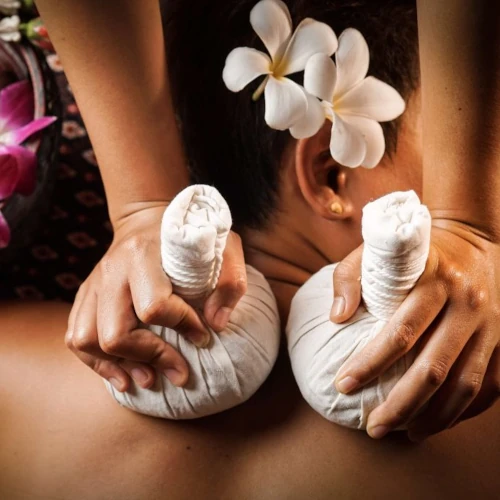
The ingredients of Thai herbal compress balls vary widely depending on the purpose of the treatment. The anti-inflammatory and analgesic properties are most pronounced in turmeric roots, but also in plai roots and lemongrass. These components can be used together or separately.

Here at Kunlarat Massage, we believe that hot compress, fire cupping, and acupuncture are the only possible hands-on treatments for inflamed discs, although some physical therapists and chiropractors may not agree with this.
…if back pain subsided
When your disc disease is chronic, sluggish, or asymptomatic, a regular massage aimed at the disc’s s surrounding muscles and tissues is absolutely essential for recovery. The reason is that such a massage increases the blood flow carrying oxygen, white blood cells, and nutrients to the injured area. If the circulation is limited, enough blood doesn’t reach the disc, and the body can’t complete the healing process.
The recovery of the spine often requires increasing the space between vertebrae (spinal decompression) to reduce intervertebral pressure and regain range of motion in the joints. In mild cases, this is achieved by gentle stretches, that can be done, with desire and perseverance, even on your own. However, it would be much better if a professional therapist with knowledge of anatomy and hands-on skills incorporated stretching techniques into your regular massage sessions.

A unique feature of traditional Thai massage that distinguishes it from any other type of massage is precisely the combination of rhythmic acupressure, deep compressions, and guided yoga-like body maneuvers. Though considering possible complications, its standardized protocols for treating back disorders and injuries always consist primarily of pressing steps, with only a few stretching and with no bending backward. For patient safety, the procedure is conducted in a lying but not in a sitting position.
It’s also worth knowing that there are two main styles of traditional Thai massage: the Southern with the center at the Wat Pho temple in Bangkok and the Northern with the center in Chiang Mai. The Southern is traditionally related to medical massage and more focused on acupressure rather than stretching, while the Northern is associated with relaxation massage and assisted Yoga movements.
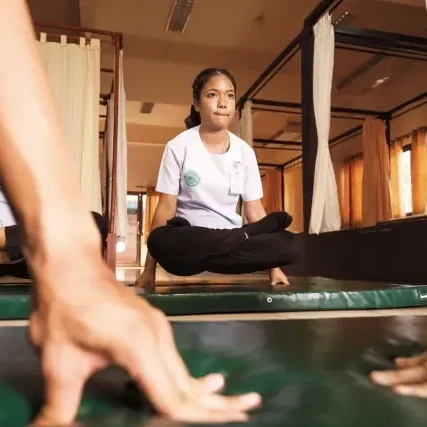
Despite being located in Chiang Mai, Kunlarat Massage therapists are more likely to use acupressure (Wat Pho) methods, due to the professional background of most of us. Specifically for a bad back, we developed a package comprising a hot herbal compress and traditional Thai massage.

Traditional Thai Massage
& Hot Herbal Compress
IN KUNLARAT MASSAGE
1.5 hrs / 700 ฿
2 hrs / 850 ฿