

Many clients at our massage studio – most often Westerners – avoid Thai massage because they think it is too uncomfortable or even painful, something closer to a bone-setting treatment. For them, “massage” is associated only with gentle oil massage. Interestingly, our largest group of clients – Koreans – tend to prefer Thai massage and even specifically request that it be done “harder.”
So, is Thai massage really supposed to be painful? Let’s find out.
The Essence of Thai Massage
Unlike Western (Swedish or Deep Tissue) massage, which involves long strokes and kneading, traditional Thai massage is a type of therapeutic bodywork that combines rhythmic compression with short strokes, assisted yoga-like stretches, and joint mobilization. The aim is to stimulate blood circulation throughout the body.
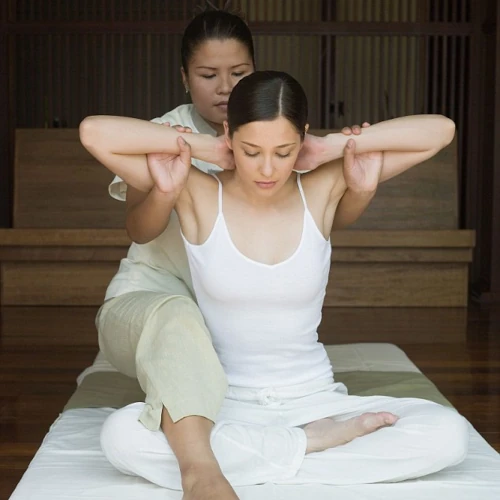
In the terms of traditional Thai medicine, blood circulation is considered the physical carrier of life energy. In modern medical terms, it delivers oxygen and nutrients to the body’s tissues and organs while removing waste products such as carbon dioxide and toxins. Either way, improved circulation enhances cellular metabolism and supports natural healing processes, leading to higher energy levels and a stronger sense of well-being.
To release tension in contracted tissues that restrict circulation, Thai massage therapists use their hands, thumbs, elbows, knees, forearms, feet, and sometimes even wooden sticks along the body’s energy lines. They often apply pressure using their body weight, which can feel quite intense for some clients and may cause mild pain. However, this pain is normally considered “good pain.”
What Is “Good Pain”?
If you have experienced professional Thai massage before, you may recognize this sensation. As your tissues are stretched and manipulated in ways they are not accustomed to, it produces a feeling often described as “good pain,” “pleasant discomfort,” or a “hurts so good” sensation.
In Thai massage teachings, “good pain” feels like a deep release rather than sharp suffering. It exists only during the session and does not linger afterward. Your body should feel lighter and more open—never bruised or injured. Ideally, the massage is performed so skillfully that the client drifts into a trance-like state or even falls asleep.
Relaxation Response vs. Protective Response
Some people mistakenly believe that harder, more painful pressure equals better therapy. But the “no pain, no gain” approach is incorrect. Healing processes such as cellular regeneration and the production of biochemicals like serotonin and dopamine—essential for recovery and well-being—are activated only when the body enters what is called the relaxation response. This state is characterized by slower heart rate, lower blood pressure, relaxed muscles, improved blood flow, and enhanced immune function.
Excessive pain during massage, on the other hand, is counterproductive. It triggers a protective response, where cortisol and adrenaline levels rise, muscles tense, and circulation becomes restricted. This suppresses healing and defeats the very purpose of the massage. That is why Thai massage should be as relaxing and as painless as possible.
Signs of a Skilled Therapist
If your muscles are especially tight, a Thai massage therapist may need to apply deeper pressure and stronger stretches. Working on injured or inflamed areas can sometimes cause temporary pain, especially during the relief phase.
The subtle art of Thai massage lies in the therapist’s ability to continuously sense the client’s body and watch their reactions. A skilled therapist may approach the boundary of pain but never cross it, alternating intense manipulations with soothing techniques that calm the nervous system. This requires experience, intuition, and the ability to “listen with the hands,” rather than simply following a mechanical sequence of moves.
A good Thai massage therapist should never push you into the zone of “bad pain.”
What Is “Bad Pain”?
“Bad pain” is pain that makes you clench your fists, hold your breath (or breathe rapidly and shallowly), grind your teeth, or involuntarily tense your entire body. On medical pain scales, these are clear nonverbal signs of severe discomfort, usually corresponding to 7–8 out of 10. Unlike good pain, bad pain often lingers after the session and leaves you feeling drained rather than refreshed.
This usually happens when a practitioner applies too much pressure, holds a stretch too long, or forces the client into uncomfortable positions without paying attention to their reactions. Unfortunately, many therapists have only basic training and follow the same fixed sequence of techniques with every client. In addition, some clients may come with underlying health issues—such as arthritis or fibromyalgia—that the therapist may not be aware of.
What to Do: Communicate
Massage should never feel like an endurance test. If you experience sharp, acute, or unbearable pain during your session, you should always let your massage therapist know immediately. Equally, if you feel ongoing discomfort, do not hesitate to speak up. Communication is the key to making sure your massage is both safe and effective.
If you have any medical conditions, previous injuries, or simply know that you are hypersensitive to pain, inform your therapist before the session begins. A professional massage therapist will adapt their techniques to your needs. However, if your therapist ignores your requests to ease the pressure or dismisses your concerns, it is best to end the massage rather than risk harm. Your comfort and safety should always come first.