

Don’t trust your neck to non-professionals—it could end in tragedy!
A Chiang Mai-based Thai neurosurgeon recently shared on Facebook a case involving a 54-year-old man who lost the ability to speak and experienced weakness in his right arm and leg. After speaking with the patient, the doctor discovered that the man had asked his wife to massage his neck to relieve pain. Brain scans revealed severe damage to the carotid artery, cutting off blood flow to the left side of his brain and causing significant tissue death in that area.
A similar tragedy occurred in December 2024, when a 20-year-old Thai singer was paralyzed for a month and ultimately passed away after receiving the massage, which included neck twisting.
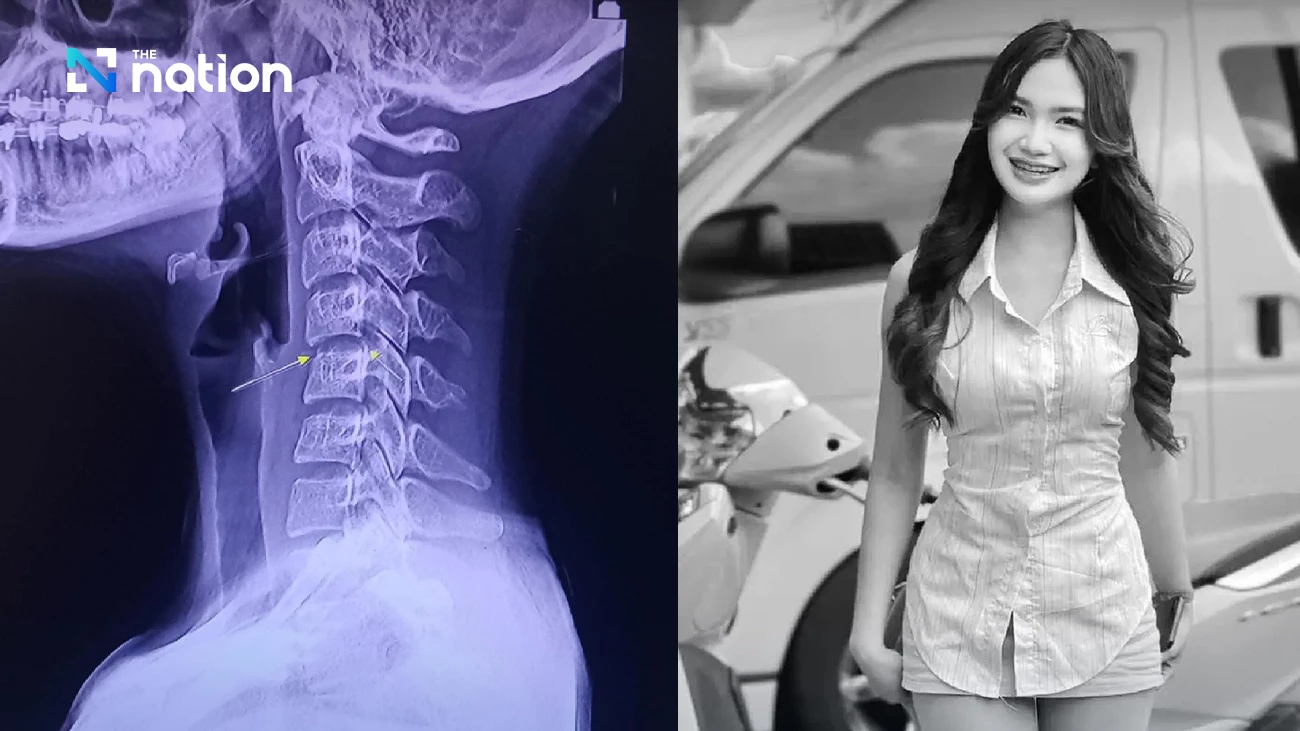
Today, we’d like to explain why improper neck massages can be so dangerous. Understanding human anatomy and learning how to avoid rupturing delicate blood vessels is essential not only for massage therapists but also for clients themselves.
1. Arteries that supply blood to the brain
The brain receives blood through four arteries:
The vertebral arteries (two) pass through channels within the cervical vertebrae, supplying the remaining blood volume. Temporary compression of these arteries often causes dizziness, headache, impaired coordination, blurred vision, lightheadedness, or fainting.
Carotid arteries (two) provide 70–85% of the blood supply. They run along the lateral sides of the neck. Compression of these arteries can quickly lead to an ischemic stroke.

2. How the vertebral artery can be damaged during a neck massage
1️⃣ Excessive pressure at the base of the skull
The vertebral artery branches into smaller vessels behind and below the ear, at the base of the skull. This area is surrounded by suboccipital muscles, which support the head and are often tense due to static strain (e.g., prolonged computer or smartphone use). Sudden stretching or strong pressure on these muscles can cause spasms, compressing nearby vessels and leading to dizziness or loss of balance.

Allowed: gentle massage of the base of the skull with fingertips using circular motions or light rubbing. The patient should lie on their back with their head slightly elevated or supported by the therapist’s hands to relax the muscles.
Prohibited: strong pressure with fingers or elbows, or rapid, jerky movements in this area.

2️⃣ Abrupt neck twisting
Some masseuses like to end a massage with an impressive, cracking turn of the client’s head. This should never be done under any circumstances!
Vertebral arteries pass through narrow bony channels in the cervical vertebrae, limiting their mobility. Sudden twists, stretches, or pressure on the vertebrae can compress or injure these arteries. In 7–30% of people, Kimmerle’s anomaly — an additional bony structure on the first cervical vertebra — increases the risk of artery compression.

Allowed: gentle stroking, tapping, or circular fingertip movements around the cervical vertebrae to relax adjacent muscles (trapezius, splenius, etc.).
Prohibited: twisting or stretching of the neck, or strong pressure directly on the vertebrae, especially their processes.
3. How the carotid artery can be damaged during a neck massage
Excessive compression of the carotid artery can also cause brain hypoxia and, as a consequence, dizziness, loss of consciousness, or even ischemic stroke. Moreover, baroreceptors are located on the inner wall of the carotid artery, and their stimulation can lead to a decrease in arterial blood pressure and cardiac arrhythmia. In severe cases, this can cause heart stoppage or fainting.
The greatest danger is posed by blood clots (atherosclerotic plaques of cholesterol on the vessel walls) in elderly people and those suffering from obesity. The likelihood of blood clots forming in the carotid arteries is higher than in the vertebral arteries because they have a larger diameter and slower blood flow. If a clot in the carotid artery breaks loose, it can block blood flow to the brain, causing a stroke.

Nevertheless, on both sides of the neck, above the carotid arteries, are the large paired sternocleidomastoid muscles, which play a crucial role in maintaining head position. These muscles also benefit from regular massage.
Allowed: light stroking, gentle rubbing, circular fingertip movements, or pinching motions (lightly grasping the muscle between thumb and index finger). After the massage, the muscle can be gently stretched by carefully tilting the head.
Prohibited: strong pressure on the lateral neck surfaces.

4. Why is massaging the front part of the neck not recommended
Massage of the front part of the neck – or “throat massage” – is very rarely performed due to the risk of damaging not only the carotid artery but also the thyroid gland (its massage can provoke hormonal imbalance), trachea, esophagus, and lymph nodes.