

Maintaining brain function and preventing dementia can be supported through targeted self-massage of specific acupressure points on the head and neck. The key combination includes the central Baihui point, the four surrounding Sishencong points, and the basal Fengchi point.
Stimulating these acupoints promotes better blood circulation to the brain, enhances Qi flow, clears the mind, and may help delay age-related memory decline—making this a simple, natural practice for cognitive health, especially when started in middle age.
Blood circulation is a vital part of overall health. When an area of the body becomes stiff, blood flow decreases, leading to poor nourishment of the cells and, over time, possible damage to internal organs.
People under chronic stress, those with unhealthy lifestyles, or individuals with a family history of cardiovascular disease, diabetes, hypertension, or high cholesterol are at greater risk of developing degenerative brain conditions. Gradual damage to brain nerve cells significantly increases the likelihood of dementia.
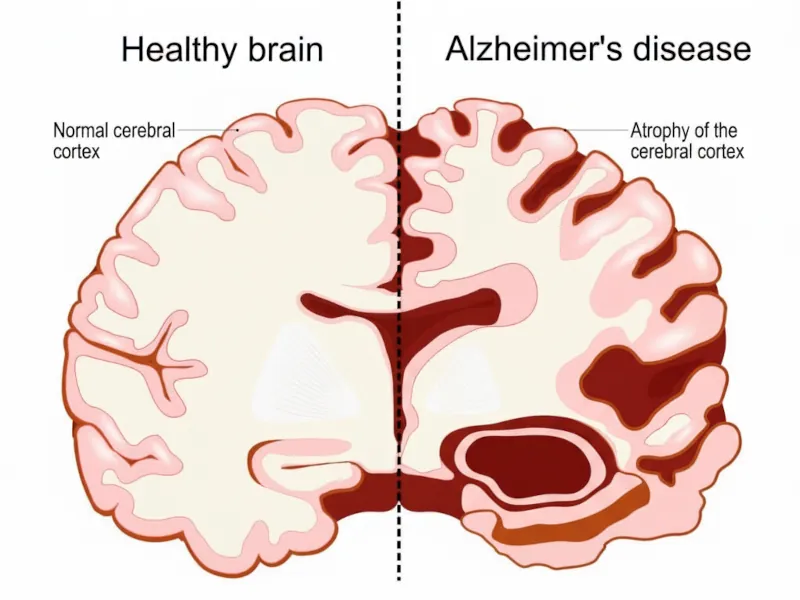
What is Dementia?
Dementia is a progressive condition characterized by a decline in memory, language, problem-solving, and other cognitive abilities severe enough to interfere with daily life. Its most common forms are vascular dementia (linked to strokes or blood vessel issues) and Alzheimer’s disease.
While dementia remains incurable, its progression can be slowed. From the perspective of Traditional Chinese Medicine (TCM), beyond maintaining a healthy lifestyle, balanced diet, quality sleep, and regular physical activity, stimulating specific energy points (acupoints) can also help improve blood circulation, protect brain health, and delay the onset of neurodegenerative changes.
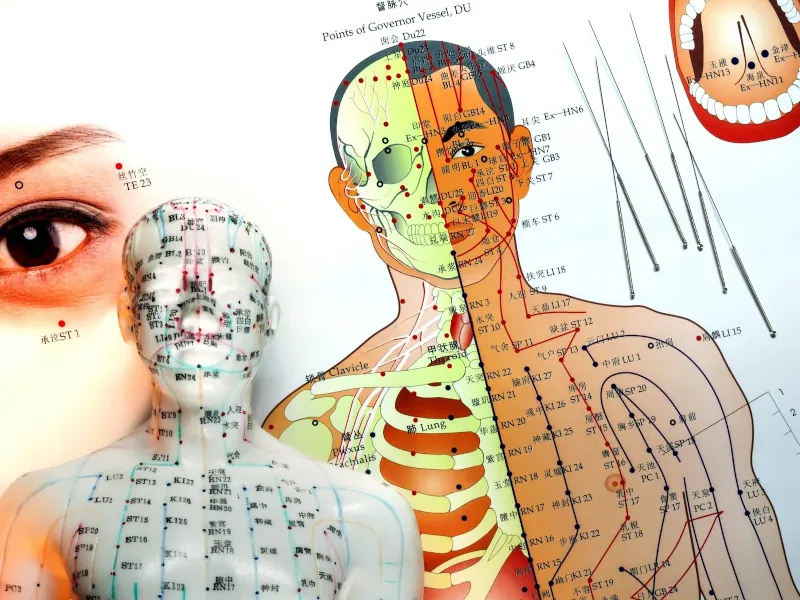
Acupuncture is considered the most precise method, but acupressure provides an accessible and safe alternative for daily practice. These approaches have been used worldwide as complementary therapies with minimal side effects.

Key Acupoints for Brain Health
The primary TCM protocol for preventing and managing vascular dementia and Alzheimer’s disease focuses on stimulating five head acupoints — the central Baihui (GV20) point and four surrounding Sishencong points — together with Fengchi (GB20) at the base of the neck. The head acupoints are considered gateways for nourishing the brain from above, while the neck acupoint helps energy flow from below.
This 5+1 combination is widely recommended by Chinese physicians for daily self-massage. Regular stimulation of these points enhances blood flow to the brain, improves the flow of Qi (vital energy), clears the mind, supports cognitive function, and slows age-related memory decline. The practice is described as “awakening the brain”, preventing stagnation and maintaining mental vitality, especially when started in middle age.
How to Find These Points
● Baihui (百会, GV20)
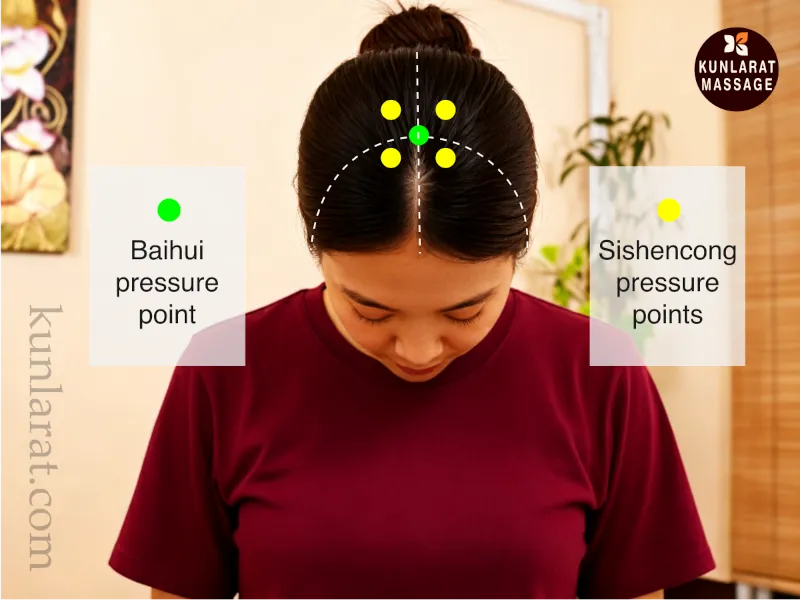
Located at the crown of the head. To find it, draw imaginary lines upward from the tips of both ears; the point lies at their intersection in a small depression. Alternatively: trace upward from the tips of the earlobes to the midline of the skull.
Effects: Refreshes the mind, improves eyesight, opens the orifices, and calms the spirit. It can be used to address depression, neurasthenia, and schizophrenia.
● Sishencong (四神聪)
A group of four acupoints surrounding Baihui, each located 1 cun (about the width of your thumb or 3 cm) from the central point:
- Anterior Sishencong: 1 cun in front of Baihui
- Posterior Sishencong: 1 cun behind Baihui
- Left Sishencong: 1 cun to the left of Baihui
- Right Sishencong: 1 cun to the right of Baihui
In TCM, these points are called the “Four Intelligent Spirits” surrounding the “Hundred Meetings” (Baihui).
Effects: Enhance memory, concentration, and overall cognitive function; calm the spirit; clear the senses; and help prevent headaches, dizziness, insomnia, and age-related decline in brain function. Stimulating them amplifies the effects of Baihui and promotes balanced brain activity.
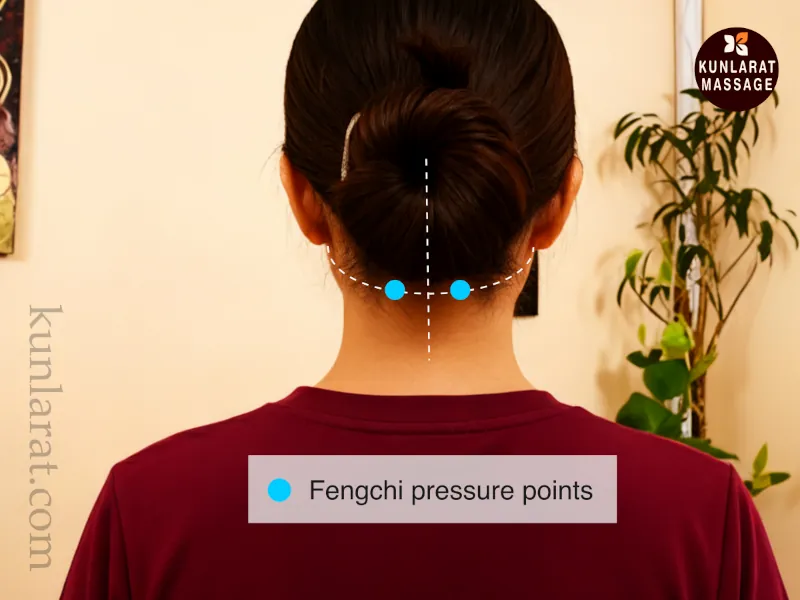
● Fengchi (风池, GB20)
Located at the base of the skull, in the hollow between the neck muscles.
Effects: Brings energy to the brain, relieves neck tension, reduces headaches, and prevents “wind” (风邪), a TCM concept associated with neurological disorders.
Preparation
Sit comfortably, relax, and breathe deeply and slowly. It is best to practice on an empty stomach or at least one hour after eating. Perform daily or 2–3 times a week.
Step-by-step massage:
● Baihui: Use the pads of your index and middle fingers. Press gently and make circular motions clockwise and counterclockwise about 50 times each. Hold for 1–2 minutes.
●●●● Sishencong: Massage or tap each point in turn, or cover them simultaneously with both hands. Perform circular motions or light tapping for 1–2 minutes at each point, starting front, then back, left, and right.
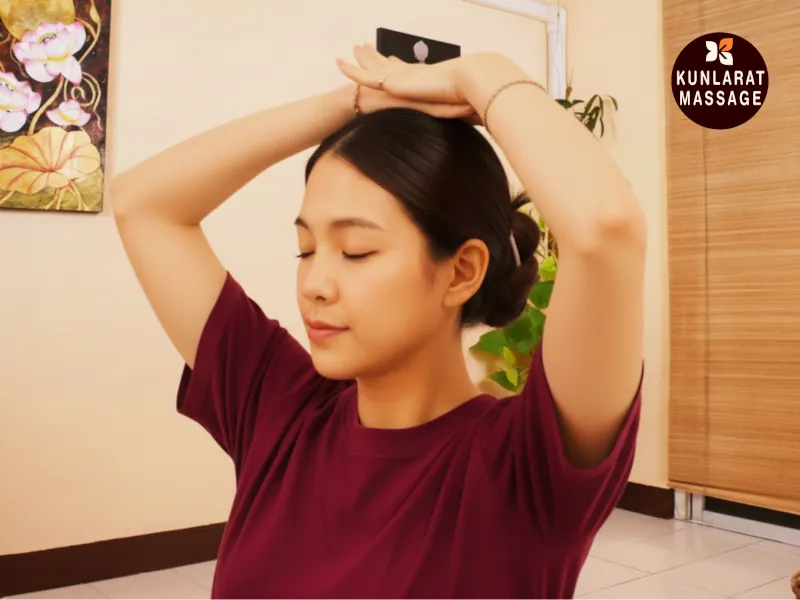
●+●●●● General Head Massage: Place your palms on top of your head, overlap them, and massage the scalp in circular motions with light pressure.
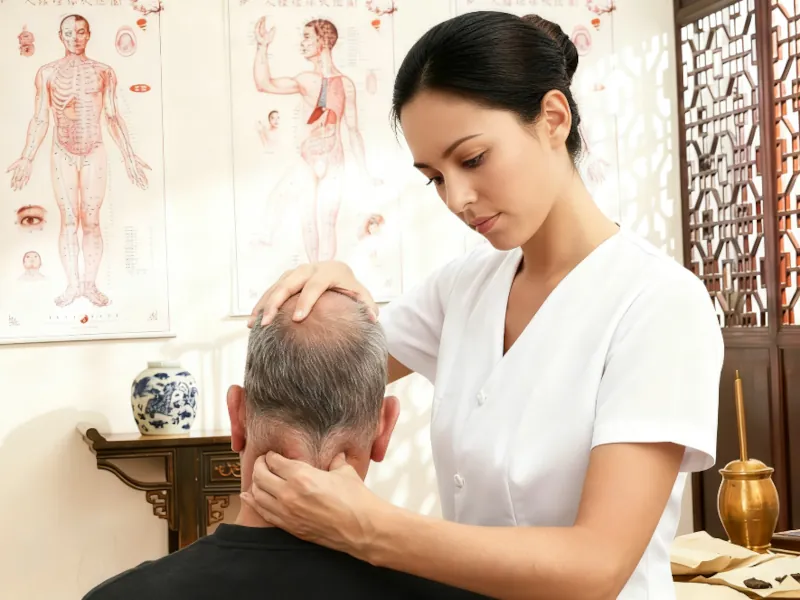
● Fengchi: Place your thumbs on the points (one on each side) while the other fingers support the head. Press firmly and make small circular motions for 1–2 minutes, or knead gently while tilting your head slightly forward to relax the neck.
General guidelines for self-massage
- The thumb and index finger are best suited for pressure, but you can use any other finger.
- Be gentle and avoid excessive pressure. You should never feel pain, but some tenderness is natural and positive. Gradually increase the pressure over time to allow the muscle tissue to relax. If there is no muscle tissue at the point, simply increase the pressure in the same manner.
- Start slowly and massage in circles initially. You can apply steady pressure and hold until you feel a “good pain,” or use a pattern of holding the pressure for 5 seconds and then releasing it for 1 second.
- Press on each point for about 2-3 minutes. Then perform the sequence on the corresponding point on the other side of the body.
- If your hand gets tired from applying pressure, pause and shake out your hand.
- Deep, slow breaths enhance the effectiveness of acupressure.
- Practice regularly for best results. You can perform this technique 2-3 times per week or daily.
Scientific Perspective
Some clinical studies suggest that regular acupressure on head points like Baihui can improve cognitive function in older adults with mild cognitive impairment, potentially helping to slow progression toward dementia. Other research indicates that long-term acupressure (e.g., 6 months) may enhance daily living activities and quality of life in those with mild-to-moderate dementia.
However, this practice is not a substitute for medical treatment – always consult a healthcare professional if you suspect dementia.